Blomberg Refrigerator Not Cooling? Same Day Repair Service in Boston, MA
Warranty up to 1 year

Fast same day service

Prices are below average by 25%
Fix My Refrigerator
Ask a Question


Emergency Callback


> 300 reviews
Second Life for Appliances
201 Washington St
ABV-Service
Common Reasons Your Refrigerator Stopped Cooling
Several factors explain why your appliance suddenly stopped cooling effectively. The most common cause involves dirty condenser coils that have accumulated dust, pet hair, and kitchen debris over months of operation. When these coils become coated with insulating material, heat transfer becomes inefficient and your compressor works overtime without achieving proper cooling results. Another frequent issue involves thermostat calibration problems. If your refrigerator not cooling but freezer works, temperature sensors may be providing incorrect readings to the main control board. This particular symptom often points to airflow restrictions between compartments or a failing evaporator fan motor that cannot distribute cold air properly throughout the fresh food section. A defective start relay can prevent the compressor from engaging entirely, resulting in no cooling throughout either section of your appliance. The condenser fan motor might also fail, reducing the system's ability to expel heat and directly impacting refrigerator temperatures. Electronic control boards can develop faults over time, especially in Boston homes experiencing power fluctuations during storms or grid issues common to older neighborhoods. Sometimes the problem traces to something as simple as the refrigerator being pushed too close to the wall, restricting necessary ventilation around the condenser coils and causing overheating. Door gasket deterioration also contributes significantly, as warm room air enters when seals no longer create an airtight closure, forcing continuous compressor operation without maintaining proper internal temperatures.
One of the most perplexing situations for homeowners occurs when the freezer works but fridge is warm. This condition indicates your cooling system produces cold air effectively, but that air cannot reach the refrigerator compartment where you need it most. Most modern refrigerators utilize a single cooling system with a fan that directs cold air from the freezer into the fresh food section through strategically placed vents. If you notice your fridge not cold enough while the freezer maintains proper temperatures, inspect the vents connecting both compartments carefully. Blocked vents from overcrowding or frozen vents due to excessive humidity can restrict airflow significantly and cause temperature imbalances. A malfunctioning damper control assembly may also fail to open correctly, preventing cold air from entering the refrigerator section while the freezer continues operating normally without issues. Sometimes food items shift during daily use and block the vent opening, creating a simple fix that requires only rearranging contents to restore proper circulation immediately. In other instances, ice accumulation from a defective defrost system completely obstructs the airway, requiring manual defrosting or professional intervention to address the underlying cause of the freezing problem permanently. The placement of temperature sensors affects performance too, as many units locate sensors only in the freezer section, relying on proper airflow to maintain refrigerator temperatures accurately. When that airflow becomes compromised, the freezer continues registering correct temperatures while the refrigerator gradually warms to unsafe levels for food storage, creating confusion about where the actual problem exists.
When your fridge runs but not cooling, the evaporator fan deserves immediate investigation. Located behind the freezer interior panel, this fan draws air across the evaporator coils and circulates it throughout both compartments to maintain consistent temperatures. If you hear the compressor operating but feel minimal cold air emerging from vents, the fan motor may have failed completely and requires replacement. Related problems include defrost system failures that manifest in specific ways. If your appliance fails to cool after defrost, the defrost timer, heater, or thermostat might require replacement by a qualified technician. During normal operation, your refrigerator periodically defrosts to prevent ice accumulation on evaporator coils that would otherwise block airflow. When this system malfunctions, ice builds until it completely blocks airflow, causing your refrigerator not cooling at all while the compressor continues running endlessly without results. The defrost thermostat specifically monitors evaporator temperature and signals when defrosting should begin and end based on factory settings. A failed defrost heater means ice continues accumulating until the evaporator coils become entirely encased in frost, eliminating any possibility of cold air circulation throughout the appliance and leading to warming temperatures. You might observe your refrigerator not cooling intermittently as ice builds and partially melts during warmer periods, creating temporary periods of proper function followed by complete cooling failure. This pattern almost always indicates defrost system components requiring professional diagnosis and replacement by technicians experienced with Blomberg refrigerator repair Boston, MA residents rely on for dependable service when temperatures rise unexpectedly.
Evaporator Fan and Defrost System Issues
Sudden temperature increases sometimes follow electrical events in your home that affect sensitive components. If your refrigerator not cooling after power outage, the compressor may have struggled to restart when electricity returned after an interruption. Many compressors incorporate thermal overloads that trip during power fluctuations, requiring manual reset procedures that homeowners can perform safely. For situations where your freezer specifically shows warming trends while the refrigerator seems unaffected, the compressor or start relay might be failing gradually. These components work together to initiate the cooling cycle when temperatures rise above set points. Compressor problems typically require professional assessment because they involve sealed system components that homeowners cannot access or repair without specialized equipment. If you've noticed your refrigerator not cooling at all despite hearing the compressor run continuously, the sealed system might have developed a refrigerant leak requiring specialized repair and recharging. Power surges can also damage control boards, preventing proper communication between temperature sensors and cooling components throughout your refrigerator system and causing erratic operation. Voltage fluctuations common during Boston thunderstorms can gradually degrade electronic components until they fail completely, often without warning signs beforehand. Some compressors produce clicking sounds when attempting to start but failing, indicating start relay failure rather than compressor death, which changes repair costs significantly. This distinction matters substantially because replacing a start relay costs considerably less than compressor replacement, though both require professional service from technicians offering upfront pricing and same day emergency appointments when your food faces spoilage risk during warm Boston weather.
Power Outages and Compressor Concerns
Airflow Problems When Freezer Works But Fridge Is Warm
Walking into your kitchen to find your refrigerator struggling to maintain cold temperatures creates an immediate household crisis for Boston homeowners. The moment you notice perishables feeling warmer than usual, concerns about food safety and potential waste quickly become overwhelming. This situation becomes especially problematic during Boston's humid summers when elevated room temperatures place additional demands on already stressed cooling systems. If your Blomberg refrigerator not cooling properly, understanding the potential causes helps you determine whether simple troubleshooting might resolve the issue or if professional Blomberg refrigerator repair Boston, MA services are needed. Many cooling problems stem from understandable factors that homeowners can identify with basic knowledge, while others require the specialized expertise that trained technicians provide. Boston's distinctive climate patterns, with significant humidity swings throughout the seasons, can affect refrigerator performance in ways that local repair professionals understand intimately. Taking time to learn about potential failures also helps you communicate more effectively with service providers and make confident decisions about whether repair or replacement makes the most financial sense given your appliance's age and condition. The specific symptoms you observe, combined with your unit's maintenance history, all contribute to an accurate diagnosis and effective resolution.
Why Is Your Blomberg Refrigerator Not Cooling? Common Causes and Solutions for Boston, MA Residents
Fix: Compressor diagnosis & replacement. We verify the issue and install a new unit.
Compressor Failure
Symptom: Fridge is silent or makes loud clicks/hums but stays warm. Feel the back – If hot, the compressor is struggling.
01
10 Most Common Problems
Found your problem? Most fixes require special tools and parts. Get a professional diagnosis & same-day repair
Repair Now
Fix: Leak detection & seal. We find the leak, solder it and recharge the system
Refrigerant (Freon) Leak
Symptom: Cooling gradually gets worse over weeks. See oily spots under or behind the fridge?
02
Fix: Defroster heater, timer, or sensor replacement. We restore automatic defrosting.
Defrost System Failure
Symptom: Freezer has thick ice, fridge is warm. Unplug for 24 hours – does it work again briefly?
03
Fix: Fan replacement. Our tech can swap it in under an hour.
Faulty Evaporator Fan
Symptom: Freezer is cold, fridge is warm. Hear a humming noise from the freezer? If silent, the fan is stuck.
04
Dirty Condenser Coils
Symptom: Fridge runs non-stop but stays warm. See a layer of dust on the rear coils?
Fix: Professional coil cleaning. We vacuum them thoroughly in 30 minutes.
05
Symptom: Temperature display is wrong or shows an error code (like "Err")
Bad Temperature Sensor
Fix: Sensor diagnostics & replacement. We find and swap the faulty sensor.
06
Symptom: Fridge is completely off or stuck on max cold. No click when you turn the dial?
Defective Thermostat
Fix: Thermostat swap. We install a compatible unit on the spot.
07
Symptom: Compressor tries to start with a click/buzz but fails. Hear a single click then silence?
Faulty Start Relay
Fix: Relay replacement. A quick and inexpensive fix for a common issue.
08
Symptom: Display is dead or shows gibberish, buttons don't respond. Is your fridge "brain dead"?
Faulty Main Control Board
Fix: Board diagnostics & repair/replacement. We reset or replace the electronic control.
09
Symptom: Compressor runs, but cooling is weak or absent. Hear a faint hissing inside?
Clogged Capillary Tube
Fix: System flush or filter drier replacement. Requires professional tools to clear the blockage.
10

Numbers speak better than words
We will arrive in
hour
We come quickly, because we value not only our time, but also the time of our customers
We will fix it in
1
hour
We repair promptly, but not in a hurry so as not to drop quality of work
Warranty up to
1
year
But we prefer to repair so that appliances last much longer than the warranty period
More than
15
years of work
Although experience is measured not by the number of years, but by the quality of work
Quality
100
percent
We do our job the best we can because we cannot afford to work badly
A lot of repaired
equipment
We do not know the exact figure
because we do not calculate equipment, but repair
because we do not calculate equipment, but repair

1

Why Choose Our Service?

Experienced
They fix complex refrigerator issues that others often miss, thanks to 15+ years of hands-on experience

Polite
They provide not only quality repair but also respectful treatment, ensuring your psychological comfort

Neat
Our technicians arrive in clean uniforms, use protective covers and clean up after themselves
Certified technicians with proven advantages
Washer
Refrigerator
Dishwasher
Range
Dryer
Oven
Cooktop
Freezer


All Major Appliances Repaired
03
02
01
Final Performance Test
We test your appliance together with you to ensure everything works perfectly before we leave
Complete Cleanup
We leave your home as clean as we found it - no traces of repair left behind
Expert Care Advice
We provide personalized tips to extend your appliance's lifespan and prevent future issues


Honest & Transparent Pricing

Fair & Affordable Pricing
Quality repair isn't necessarily expensive
The cost of repair corresponds to its value
The cost of repair corresponds to its value
Client-Recommended Service
Our best advertisement is our customers' satisfaction
Most of our new clients come from referrals
Most of our new clients come from referrals
Genuine Parts at Cost Price
We source parts directly to keep your repair affordable without compromising on quality
Below average by
25%

Warranty Up to 1 year
This is 2 times longer than the city average
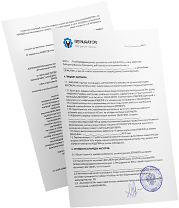
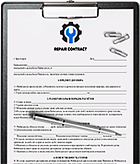
Formal Warranty Agreement
We provide a written contract that clearly states the scope of work, cost, and full warranty terms
Local Workshop & On-Site Service
We have a real workshop you can visit
A local business you can trust
A local business you can trust
We Value Our Reputation
A good reputation is the foundation of success
Therefore, we try to keep a high level of service
Therefore, we try to keep a high level of service

Our 6-Step Repair Process
From your first call to a guaranteed fix

Free Expert Consultation
We listen to your problem, suggest the most likely cause and provide a transparent cost estimate
1
Fast Technician Dispatch
The technician will arrive within 1 hour or at a convenient time for you, with all the necessary spare parts
2

On-Site Diagnosis & Quote
We diagnose the issue right in your home and present the exact cause and final price for your approval
3
Same-Day Repair
4
Final Test & Cleanup
We test the appliance with you, clean the work area and share tips for optimal performance
5
Contract & guarantee
You receive a clear warranty document. Your repair is now complete and protected
6

90% of repairs are completed within an hour. For the rest, we strive for a 24-hour solution
Customer Stories
Real feedback from people we've helped
Sophia
You work promptly! A few hours after the call, my washing machine was already working. The technician Alexander promised that it would work longer than the new one did. I take it at his word!

Good company!!! In the evening my dryer broke. I called here. The technician fixed it within lunchtime. He did everything in an hour! I paid 150. Well done!!!
Grase
The technician Mike is a pleasant professional. He quickly figured out the cause of the water leak in our refrigerator and fixed it just as quickly. He was very neat and courteous. The other technician from another service was rude and even scratched our floor. But Mike did everything on 5 stars, he also answered all of our questions and gave several recommendations. I thank him and recommend him. Mike, good luck!
Work rating

Work rating
Work rating
Natalie
I have this problem
Samuel
The mechanic arrived quickly, fixed it promptly, gave recommendations so everything was fine. If the repair cost is not more than 100$, I would give it 5 stars. But it was not so, so I give 4
Mia
The technician Alex is a sincere person, pleasant to talk to. One feels that he is working conscientiously. Such a great person that I even treated him with tea! Thank you, Alex!
Olivia
It’s super that you send technicians out of town as well! I live 40 miles away from the city, yet the mechanic still came and repaired on the spot! Thanks!
Work rating
Work rating
Work rating

I have this problem
Ava
I am very grateful to the mechanic
David! A true professional in his field!
I believe that he did a great job today repairing my oven. I would like to note his competence as a tech, as well as good manners and culture as a person, which is very important when communicating with people! More often I want to meet such tech! Thanks!
David! A true professional in his field!
I believe that he did a great job today repairing my oven. I would like to note his competence as a tech, as well as good manners and culture as a person, which is very important when communicating with people! More often I want to meet such tech! Thanks!
Charlotte
My oven stopped turning on. I called the mechanic. Alex arrived and quickly found the cause: the problem turned out to be in the outlet, something shorted out there. He fixed it for me and the stove works again. Thank you very much! Your technicians are also very honest people! Thanks!!!
Amelia
David fixed our refrigerator for 180$. I am pleased!
Work rating
Work rating
Work rating
I have this problem
Nick
Everything is fine, it was fixed quickly. Keep it up!
Camila
We are very pleased with the work of the technician. He arrived 20 minutes after the call. Quickly fixed the problem of the washing machine
Michael
I liked everything: the price, the technician, and his work. Nice to deal with!
Work rating
Work rating
Work rating
I have this problem
Victoria
We are very grateful to the technician, I do not remember his name, but he arrived yesterday at 6 pm, did everything quickly and well. We are very satisfied with the work. We had wanted to throw it away before as the refrigerator is already 15 years old, but now it will serve more. Thanks!
Logan
The light on our Sub-Zero refrigerator suddenly stopped turning on. Alex arrived in an hour, diagnosed the problem, replaced the part with an original part and everything was back to normal. The price was fair, I'm satisfied. Service A+++++
James
Great service, everything works, thanks
Work rating
Work rating
Work rating
I have this problem
Elizabeth
The technician was very polite and experienced. The job was done very quickly, and he called me when he was 20 minutes away, just as I had asked
Fast repair of our high-quality ovens. They had the necessary parts and the experience. Henry is a true professional! I will definitely use their services again
Greg
Our washing machine broke down. I was pleasantly surprised that the specialist arrived within a couple of hours. He ordered new parts, which arrived in a few days and were installed on the day of delivery. Excellent service! Will gladly use it again!
Work rating
Work rating
Work rating
Natalie
I have this problem
Lesley
I had a problem with my refrigerator, and I called this service. The specialist came the same day without any delays and not only fixed the issue but also explained how everything works, being very polite and patient. I am very pleased!
Mike
The company quoted a fair price for the job. I contacted another company first, but their cost was twice as high. These guys don't overcharge. I will definitely use their services again
Jeremy
The technician Mike was very prompt and competent. He completed several repairs within the tight deadlines I required. Very satisfied with this company's services
Work rating
Work rating
Work rating
You work promptly! A few hours after the call, my washing machine was already working. The technician Alexander promised that it would work longer than the new one did. I take it at his word!
Good company!!! In the evening my dryer broke. I called here. The technician fixed it within lunchtime. He did everything in an hour! I paid 150. Well done!!!
The technician Mike is a pleasant professional. He quickly figured out the cause of the water leak in our refrigerator and fixed it just as quickly. He was very neat and courteous. The other technician from another service was rude and even scratched our floor. But Mike did everything on 5 stars, he also answered all of our questions and gave several recommendations. I thank him and recommend him. Mike, good luck!
The mechanic arrived quickly, fixed it promptly, gave recommendations so everything was fine. If the repair cost is not more than 100$, I would give it 5 stars. But it was not so, so I give 4
The technician Alex is a sincere person, pleasant to talk to. One feels that he is working conscientiously. Such a great person that I even treated him with tea! Thank you, Alex!
It’s super that you send technicians out of town as well! I live 40 miles away from the city, yet the mechanic still came and repaired on the spot! Thanks!
I am very grateful to the mechanic
David! A true professional in his field!
I believe that he did a great job today repairing my oven. I would like to note his competence as a tech, as well as good manners and culture as a person, which is very important when communicating with people! More often I want to meet such tech! Thanks!
David! A true professional in his field!
I believe that he did a great job today repairing my oven. I would like to note his competence as a tech, as well as good manners and culture as a person, which is very important when communicating with people! More often I want to meet such tech! Thanks!
My oven stopped turning on. I called the mechanic. Alex arrived and quickly found the cause: the problem turned out to be in the outlet, something shorted out there. He fixed it for me and the stove works again. Thank you very much! Your technicians are also very honest people! Thanks!!!
David fixed our refrigerator for 180$. I am pleased!
Everything is fine, it was fixed quickly. Keep it up!
We are very pleased with the work of the technician. He arrived 20 minutes after the call. Quickly fixed the problem of the washing machine
I liked everything: the price, the technician, and his work. Nice to deal with!
We are very grateful to the technician, I do not remember his name, but he arrived yesterday at 6 pm, did everything quickly and well. We are very satisfied with the work. We had wanted to throw it away before as the refrigerator is already 15 years old, but now it will serve more. Thanks!
The light on our Sub-Zero refrigerator suddenly stopped turning on. Alex arrived in an hour, diagnosed the problem, replaced the part with an original part and everything was back to normal. The price was fair, I'm satisfied. Service A+++++
Great service, everything works, thanks
The technician was very polite and experienced. The job was done very quickly, and he called me when he was 20 minutes away, just as I had asked
Fast repair of our high-quality ovens. They had the necessary parts and the experience. Henry is a true professional! I will definitely use their services again
Our washing machine broke down. I was pleasantly surprised that the specialist arrived within a couple of hours. He ordered new parts, which arrived in a few days and were installed on the day of delivery. Excellent service! Will gladly use it again!
I had a problem with my refrigerator, and I called this service. The specialist came the same day without any delays and not only fixed the issue but also explained how everything works, being very polite and patient. I am very pleased!
The company quoted a fair price for the job. I contacted another company first, but their cost was twice as high. These guys don't overcharge. I will definitely use their services again
The technician Mike was very prompt and competent. He completed several repairs within the tight deadlines I required. Very satisfied with this company's services
You work promptly! A few hours after the call, my washing machine was already working. The technician Alexander promised that it would work longer than the new one did. I take it at his word!
Good company!!! In the evening my dryer broke. I called here. The technician fixed it within lunchtime. He did everything in an hour! I paid 150. Well done!!!
The technician Mike is a pleasant professional. He quickly figured out the cause of the water leak in our refrigerator and fixed it just as quickly. He was very neat and courteous. The other technician from another service was rude and even scratched our floor. But Mike did everything on 5 stars, he also answered all of our questions and gave several recommendations. I thank him and recommend him. Mike, good luck!
The mechanic arrived quickly, fixed it promptly, gave recommendations so everything was fine. If the repair cost is not more than 100$, I would give it 5 stars. But it was not so, so I give 4
The technician Alex is a sincere person, pleasant to talk to. One feels that he is working conscientiously. Such a great person that I even treated him with tea! Thank you, Alex!
It’s super that you send technicians out of town as well! I live 40 miles away from the city, yet the mechanic still came and repaired on the spot! Thanks!
I am very grateful to the mechanic
David! A true professional in his field!
I believe that he did a great job today repairing my oven. I would like to note his competence as a tech, as well as good manners and culture as a person, which is very important when communicating with people! More often I want to meet such tech! Thanks!
David! A true professional in his field!
I believe that he did a great job today repairing my oven. I would like to note his competence as a tech, as well as good manners and culture as a person, which is very important when communicating with people! More often I want to meet such tech! Thanks!
My oven stopped turning on. I called the mechanic. Alex arrived and quickly found the cause: the problem turned out to be in the outlet, something shorted out there. He fixed it for me and the stove works again. Thank you very much! Your technicians are also very honest people! Thanks!!!
David fixed our refrigerator for 180$. I am pleased!
Everything is fine, it was fixed quickly. Keep it up!
We are very pleased with the work of the technician. He arrived 20 minutes after the call. Quickly fixed the problem of the washing machine
I liked everything: the price, the technician, and his work. Nice to deal with!
We are very grateful to the technician, I do not remember his name, but he arrived yesterday at 6 pm, did everything quickly and well. We are very satisfied with the work. We had wanted to throw it away before as the refrigerator is already 15 years old, but now it will serve more. Thanks!
The light on our Sub-Zero refrigerator suddenly stopped turning on. Alex arrived in an hour, diagnosed the problem, replaced the part with an original part and everything was back to normal. The price was fair, I'm satisfied. Service A+++++
Great service, everything works, thanks
The technician was very polite and experienced. The job was done very quickly, and he called me when he was 20 minutes away, just as I had asked
Fast repair of our high-quality ovens. They had the necessary parts and the experience. Henry is a true professional! I will definitely use their services again
Our washing machine broke down. I was pleasantly surprised that the specialist arrived within a couple of hours. He ordered new parts, which arrived in a few days and were installed on the day of delivery. Excellent service! Will gladly use it again!
I had a problem with my refrigerator, and I called this service. The specialist came the same day without any delays and not only fixed the issue but also explained how everything works, being very polite and patient. I am very pleased!
FixMix company quoted a fair price for the job. I contacted another company first, but their cost was twice as high. These guys don't overcharge. I will definitely use their services again
The technician Mike was very prompt and competent. He completed several repairs within the tight deadlines I required. Very satisfied with this company's services
Still Have Questions?
Get a Free Expert Consultation
One call could save you hundreds of dollars and solve your problem
!
We will call you within 10 minutes
Or call us
+1 (212) 653-00-89
Need Help Fast?
We will call you within 10 minutes



Schedule Your Repair
We will fix today
We will call you within 10 minutes
Free Expert Advice
We will call you within 10 minutes
Request a Callback
We will call you within 10 minutes

Share Your Experience
We value your honest feedback
It helps us become better

We'll Fix It!
We will call you within 10 minutes