Foster Refrigerator Repair
Service in Washington, DC




Common Commercial Fault Indicators and Their Sources
Choosing a Qualified Commercial Repair Provider
Implementing a Preventative Maintenance Schedule
The Requirement for Commercial-Grade Technical Proficiency
Investigating the Origins of Commercial Refrigeration Faults
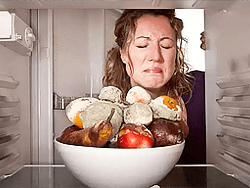
Numbers speak better than words
because we do not calculate equipment, but repair



Why Choose Our Service?

Experienced

Polite

Neat
Washer
Refrigerator
Dishwasher
Range
Dryer
Oven
Cooktop
Freezer


All Major Appliances Repaired
Final Performance Test
Complete Cleanup
Expert Care Advice


Honest & Transparent Pricing

Fair & Affordable Pricing
The cost of repair corresponds to its value
Client-Recommended Service
Most of our new clients come from referrals
Genuine Parts at Cost Price

Warranty Up to 1 year
Formal Warranty Agreement
Local Workshop & On-Site Service
A local business you can trust
We Value Our Reputation
Therefore, we try to keep a high level of service

Our 6-Step Repair Process

Free Expert Consultation
Fast Technician Dispatch

On-Site Diagnosis & Quote
Same-Day Repair
Final Test & Cleanup
Contract & guarantee

Customer Stories


David! A true professional in his field!
I believe that he did a great job today repairing my oven. I would like to note his competence as a tech, as well as good manners and culture as a person, which is very important when communicating with people! More often I want to meet such tech! Thanks!
We are very pleased with the work of the technician. He arrived 20 minutes after the call. Quickly fixed the problem of the washing machine
I liked everything: the price, the technician, and his work. Nice to deal with!
Great service, everything works, thanks
David! A true professional in his field!
I believe that he did a great job today repairing my oven. I would like to note his competence as a tech, as well as good manners and culture as a person, which is very important when communicating with people! More often I want to meet such tech! Thanks!
David! A true professional in his field!
I believe that he did a great job today repairing my oven. I would like to note his competence as a tech, as well as good manners and culture as a person, which is very important when communicating with people! More often I want to meet such tech! Thanks!
Still Have Questions?
We will call you within 10 minutes
Or call us
We will call you within 10 minutes



Schedule Your Repair
We will fix today
We will call you within 10 minutes
Free Expert Advice
We will call you within 10 minutes
Request a Callback
We will call you within 10 minutes

Share Your Experience
We value your honest feedback
It helps us become better

Not Cooling
- Compressor failure
- Refrigerant (freon) leak
- Defrost system failure
- Faulty evaporator fan
- Dirty condenser coils
- Bad temperature sensor
- Defective thermostat
Not Freezing
- Low refrigerant (freon) level
- Faulty defrost system
- Blocked air vent to freezer
- Malfunctioning evaporator fan
- Faulty freezer temperature control
- Damaged or dirty door gasket
- Compressor start issue
Not Turning On
- Power cord or outlet issue
- Blown thermal fuse
- Failed control board
- Faulty start relay
- Broken thermostat
- Compressor failure

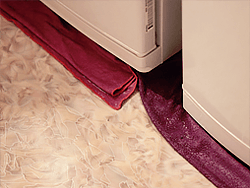
Leaking Water
- Clogged defrost drain
- Ice maker line or connection leak
- Faulty water inlet valve
- Damaged or displaced drain pan
- Cracked water line
- Freezer drain tube freeze-up
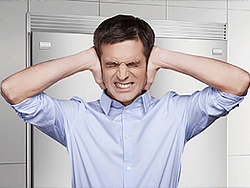
Making Noise
- Faulty evaporator or condenser fan
- Worn or failing compressor
- Defective start relay
- Loose components or panels
- Ice build-up on fan blades
- Ice maker motor failure

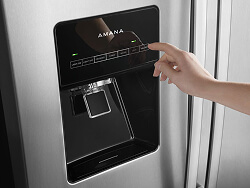
Dispenser Not Working
- Frozen water line
- Faulty water inlet valve
- Clogged water filter
- Defective dispenser switch / pad
- Faulty dispenser control board
- Damaged dispenser actuator (solenoid)
- Failed dispenser motor
- Low household water pressure
- Faulty temperature control

To Much Ice
- Faulty defrost system
- Damaged door gasket
- Blocked defrost drain hole
- Obstructed or frozen drain tube
- Malfunctioning thermostat
- Failed temperature control board
- Bad temperature sensor
- Low refrigerant level

Ice Maker Not Working
- Frozen water supply line
- Iced-up water inlet
- Faulty water inlet valve
- Clogged or old water filter
- Low water pressure
- Defective ice maker thermostat
- Faulty ice maker control board
- Failed main refrigerator control board
- Broken ice maker motor
- Damaged or jammed ice maker auger
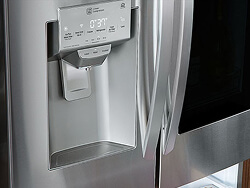
Display not Working
- Power interruption or surge
- Control lock / child lock activated
- Blown internal fuse on control board
- Failed display module / LCD screen
- Faulty main control board
- Damaged wiring harness or connector
- Defective user interface (touch) panel
Water Inside
- Clogged defrost drain
- Frozen evaporator coils
- Faulty door gasket
- Damaged or misaligned drain pan
- Defective defrost system
- Blocked drain tube
Door not Sealing
- Worn or torn door gaske
- Loose or damaged door hinge
- Misaligned door
- Damaged door seal magnet
- Obstruction in door or on gasket
- Warped door or cabinet
- Faulty door closer
We'll Fix It!