Refrigerator Not Cooling?
Same Day Repair Service
in Washington, DC
Same Day Repair Service
in Washington, DC
Warranty up to 1 year

Fast same day service

Prices are below average by 25%
Fix My Refrigerator
Ask a Question


Emergency Callback


> 300 reviews
Second Life for Appliances
5116 Wilson Ln
ABV-Service
Freezer Works, But the Refrigerator Section Is Warm
A freezer works but fridge is warm situation almost always points to an airflow failure. Cold air is generated in the freezer and moved to the refrigerator by an evaporator fan. When that fan stops working — or when the air vent becomes blocked by ice buildup or debris — the refrigerator compartment cannot stay cold. A refrigerator warm but freezer cold diagnosis is the classic symptom. In many cases, a refrigerator not cooling but freezer works is caused by a defrost system failure, which allows ice to accumulate silently behind the freezer wall. If your fridge runs but not cooling despite continuous operation, restricted airflow is the most likely culprit. These components are replaceable, and addressing them early prevents compressor strain. A local technician can confirm the cause in minutes and provide upfront pricing before any work begins. Delaying this repair often turns a modest fix into a major expense.
A stopped cooling event overnight or after a storm is typically electrical. When a refrigerator is not cooling at all, the compressor may not be receiving power. A failed start relay is a common and inexpensive fix — you might hear a single click followed by silence. Another possibility is a control board that no longer sends voltage to the cooling system. If your Freezer not cooling accompanies the issue, the sealed system may have a refrigerant leak or a clogged capillary tube. A refrigerator not cooling after power outage often resets once power is restored, but repeated failures indicate component damage. A refrigerator not cooling intermittently can also signal an electrical fault that worsens over time. These repairs require specialized tools and licensed handling. A refrigerator repair Washington, DC specialist provides accurate diagnostics and explains the cost before any service is performed. Most electrical failures are resolved within a single visit.
A unit that fails to cool after defrost usually points to a failed defrost heater, thermostat, or sensor. When the defrost system stops working, ice builds up on the evaporator coils and blocks airflow. You may notice the refrigerator runs constantly but temperatures remain marginal. If your fridge is not cold enough despite continuous operation, dirty condenser coils are another common cause. Dust and pet hair accumulate on the coils under or behind the unit, preventing heat dissipation and forcing the compressor to overwork. A same day visit can restore normal cooling in under an hour. Unlike sealed system failures, these performance issues are straightforward to diagnose and repair. Addressing them promptly extends the life of your appliance and reduces energy consumption. A warranty on parts and labor provides peace of mind and protects your investment.
Weak Cooling, Poor Performance, and Defrost Issues
You have checked the vents, cleaned the coils, and confirmed power. Your refrigerator is still not cooling properly. At this stage, professional repair is the most practical path. A licensed technician brings diagnostic equipment, genuine parts, and the experience to isolate the root cause quickly. Whether the issue is a compressor nearing the end of its life or a simple relay failure, a clear estimate and warranty provide peace of mind. If you are searching for refrigerator repair Washington, DC, look for a local provider that offers same day appointments and emergency availability. Near me searches often return companies with verified reviews and transparent upfront pricing. Your time and food are valuable — professional service restores both without unnecessary delay. When your refrigerator is not cooling, the cause is almost always a specific, repairable component. Armed with this guide, you now know what to look for — and when to make the call.
Professional Diagnosis and Local Repair Services
Sudden Cooling Loss and Complete System Failure
A refrigerator not cooling creates immediate stress — spoiled food, disrupted routines, and uncertainty about repair costs. Most cooling failures follow predictable patterns involving airflow restrictions, electrical component failure, or sealed system damage. Whether your fridge is not cooling gradually or you experienced sudden temperature loss overnight, understanding the symptoms helps you make confident decisions. This guide explains the most common refrigerator failures and shows how professional repair restores reliable cooling in Washington, DC homes. Armed with this knowledge, you will recognize early warning signs, avoid unnecessary DIY attempts, and connect with qualified help when you need it most.
Refrigerator Not Cooling? — A Complete Guide for Washington, DC Homeowners
Fix: Compressor diagnosis & replacement. We verify the issue and install a new unit.
Compressor Failure
Symptom: Fridge is silent or makes loud clicks/hums but stays warm. Feel the back – If hot, the compressor is struggling.
01
10 Most Common Problems
Found your problem? Most fixes require special tools and parts. Get a professional diagnosis & same-day repair
Repair Now
Fix: Leak detection & seal. We find the leak, solder it and recharge the system
Refrigerant (Freon) Leak
Symptom: Cooling gradually gets worse over weeks. See oily spots under or behind the fridge?
02
Fix: Defroster heater, timer, or sensor replacement. We restore automatic defrosting.
Defrost System Failure
Symptom: Freezer has thick ice, fridge is warm. Unplug for 24 hours – does it work again briefly?
03
Fix: Fan replacement. Our tech can swap it in under an hour.
Faulty Evaporator Fan
Symptom: Freezer is cold, fridge is warm. Hear a humming noise from the freezer? If silent, the fan is stuck.
04
Dirty Condenser Coils
Symptom: Fridge runs non-stop but stays warm. See a layer of dust on the rear coils?
Fix: Professional coil cleaning. We vacuum them thoroughly in 30 minutes.
05
Symptom: Temperature display is wrong or shows an error code (like "Err")
Bad Temperature Sensor
Fix: Sensor diagnostics & replacement. We find and swap the faulty sensor.
06
Symptom: Fridge is completely off or stuck on max cold. No click when you turn the dial?
Defective Thermostat
Fix: Thermostat swap. We install a compatible unit on the spot.
07
Symptom: Compressor tries to start with a click/buzz but fails. Hear a single click then silence?
Faulty Start Relay
Fix: Relay replacement. A quick and inexpensive fix for a common issue.
08
Symptom: Display is dead or shows gibberish, buttons don't respond. Is your fridge "brain dead"?
Faulty Main Control Board
Fix: Board diagnostics & repair/replacement. We reset or replace the electronic control.
09
Symptom: Compressor runs, but cooling is weak or absent. Hear a faint hissing inside?
Clogged Capillary Tube
Fix: System flush or filter drier replacement. Requires professional tools to clear the blockage.
10

Numbers speak better than words
We will arrive in
hour
We come quickly, because we value not only our time, but also the time of our customers
We will fix it in
1
hour
We repair promptly, but not in a hurry so as not to drop quality of work
Warranty up to
1
year
But we prefer to repair so that appliances last much longer than the warranty period
More than
15
years of work
Although experience is measured not by the number of years, but by the quality of work
Quality
100
percent
We do our job the best we can because we cannot afford to work badly
A lot of repaired
equipment
We do not know the exact figure
because we do not calculate equipment, but repair
because we do not calculate equipment, but repair

1

Why Choose Our Service?

Experienced
They fix complex refrigerator issues that others often miss, thanks to 15+ years of hands-on experience

Polite
They provide not only quality repair but also respectful treatment, ensuring your psychological comfort

Neat
Our technicians arrive in clean uniforms, use protective covers and clean up after themselves
Certified technicians with proven advantages























Washer
Refrigerator
Dishwasher
Range
Dryer
Oven
Cooktop
Freezer


All Major Appliances Repaired
03
02
01
Final Performance Test
We test your appliance together with you to ensure everything works perfectly before we leave
Complete Cleanup
We leave your home as clean as we found it - no traces of repair left behind
Expert Care Advice
We provide personalized tips to extend your appliance's lifespan and prevent future issues


Honest & Transparent Pricing

Fair & Affordable Pricing
Quality repair isn't necessarily expensive
The cost of repair corresponds to its value
The cost of repair corresponds to its value
Client-Recommended Service
Our best advertisement is our customers' satisfaction
Most of our new clients come from referrals
Most of our new clients come from referrals
Genuine Parts at Cost Price
We source parts directly to keep your repair affordable without compromising on quality
Below average by
25%

Warranty Up to 1 year
This is 2 times longer than the city average
Formal Warranty Agreement
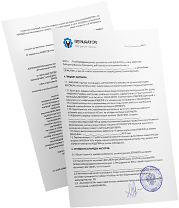
We provide a written contract that clearly states the scope of work, cost, and full warranty terms
Local Workshop & On-Site Service
We have a real workshop you can visit
A local business you can trust
A local business you can trust
We Value Our Reputation
A good reputation is the foundation of success
Therefore, we try to keep a high level of service
Therefore, we try to keep a high level of service

Our 6-Step Repair Process
From your first call to a guaranteed fix

Free Expert Consultation
We listen to your problem, suggest the most likely cause and provide a transparent cost estimate
1
Fast Technician Dispatch
The technician will arrive within 1 hour or at a convenient time for you, with all the necessary spare parts
2

On-Site Diagnosis & Quote
We diagnose the issue right in your home and present the exact cause and final price for your approval
3
Same-Day Repair
4
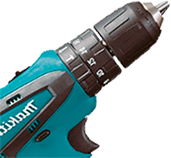
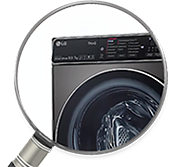
Final Test & Cleanup
We test the appliance with you, clean the work area and share tips for optimal performance
5
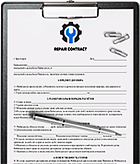
Contract & guarantee
You receive a clear warranty document. Your repair is now complete and protected
6

90% of repairs are completed within an hour. For the rest, we strive for a 24-hour solution
Customer Stories
Real feedback from people we've helped
Sophia
You work promptly! A few hours after the call, my washing machine was already working. The technician Alexander promised that it would work longer than the new one did. I take it at his word!

Good company!!! In the evening my dryer broke. I called here. The technician fixed it within lunchtime. He did everything in an hour! I paid 150. Well done!!!
Grase
The technician Mike is a pleasant professional. He quickly figured out the cause of the water leak in our refrigerator and fixed it just as quickly. He was very neat and courteous. The other technician from another service was rude and even scratched our floor. But Mike did everything on 5 stars, he also answered all of our questions and gave several recommendations. I thank him and recommend him. Mike, good luck!
Work rating

Work rating
Work rating
Natalie
I have this problem
Samuel
The mechanic arrived quickly, fixed it promptly, gave recommendations so everything was fine. If the repair cost is not more than 100$, I would give it 5 stars. But it was not so, so I give 4
Mia
The technician Alex is a sincere person, pleasant to talk to. One feels that he is working conscientiously. Such a great person that I even treated him with tea! Thank you, Alex!
Olivia
It’s super that you send technicians out of town as well! I live 40 miles away from the city, yet the mechanic still came and repaired on the spot! Thanks!
Work rating
Work rating
Work rating

I have this problem
Ava
I am very grateful to the mechanic
David! A true professional in his field!
I believe that he did a great job today repairing my oven. I would like to note his competence as a tech, as well as good manners and culture as a person, which is very important when communicating with people! More often I want to meet such tech! Thanks!
David! A true professional in his field!
I believe that he did a great job today repairing my oven. I would like to note his competence as a tech, as well as good manners and culture as a person, which is very important when communicating with people! More often I want to meet such tech! Thanks!
Charlotte
My oven stopped turning on. I called the mechanic. Alex arrived and quickly found the cause: the problem turned out to be in the outlet, something shorted out there. He fixed it for me and the stove works again. Thank you very much! Your technicians are also very honest people! Thanks!!!
Amelia
David fixed our refrigerator for 180$. I am pleased!
Work rating
Work rating
Work rating
I have this problem
Nick
Everything is fine, it was fixed quickly. Keep it up!
Camila
We are very pleased with the work of the technician. He arrived 20 minutes after the call. Quickly fixed the problem of the washing machine
Michael
I liked everything: the price, the technician, and his work. Nice to deal with!
Work rating
Work rating
Work rating
I have this problem
Victoria
We are very grateful to the technician, I do not remember his name, but he arrived yesterday at 6 pm, did everything quickly and well. We are very satisfied with the work. We had wanted to throw it away before as the refrigerator is already 15 years old, but now it will serve more. Thanks!
Logan
The light on our Sub-Zero refrigerator suddenly stopped turning on. Alex arrived in an hour, diagnosed the problem, replaced the part with an original part and everything was back to normal. The price was fair, I'm satisfied. Service A+++++
James
Great service, everything works, thanks
Work rating
Work rating
Work rating
I have this problem
Elizabeth
The technician was very polite and experienced. The job was done very quickly, and he called me when he was 20 minutes away, just as I had asked
Fast repair of our high-quality ovens. They had the necessary parts and the experience. Henry is a true professional! I will definitely use their services again
Greg
Our washing machine broke down. I was pleasantly surprised that the specialist arrived within a couple of hours. He ordered new parts, which arrived in a few days and were installed on the day of delivery. Excellent service! Will gladly use it again!
Work rating
Work rating
Work rating
Natalie
I have this problem
Lesley
I had a problem with my refrigerator, and I called this service. The specialist came the same day without any delays and not only fixed the issue but also explained how everything works, being very polite and patient. I am very pleased!
Mike
FixMix company quoted a fair price for the job. I contacted another company first, but their cost was twice as high. These guys don't overcharge. I will definitely use their services again
Jeremy
The technician Mike was very prompt and competent. He completed several repairs within the tight deadlines I required. Very satisfied with this company's services
Work rating
Work rating
Work rating
You work promptly! A few hours after the call, my washing machine was already working. The technician Alexander promised that it would work longer than the new one did. I take it at his word!
Good company!!! In the evening my dryer broke. I called here. The technician fixed it within lunchtime. He did everything in an hour! I paid 150. Well done!!!
The technician Mike is a pleasant professional. He quickly figured out the cause of the water leak in our refrigerator and fixed it just as quickly. He was very neat and courteous. The other technician from another service was rude and even scratched our floor. But Mike did everything on 5 stars, he also answered all of our questions and gave several recommendations. I thank him and recommend him. Mike, good luck!
The mechanic arrived quickly, fixed it promptly, gave recommendations so everything was fine. If the repair cost is not more than 100$, I would give it 5 stars. But it was not so, so I give 4
The technician Alex is a sincere person, pleasant to talk to. One feels that he is working conscientiously. Such a great person that I even treated him with tea! Thank you, Alex!
It’s super that you send technicians out of town as well! I live 40 miles away from the city, yet the mechanic still came and repaired on the spot! Thanks!
I am very grateful to the mechanic
David! A true professional in his field!
I believe that he did a great job today repairing my oven. I would like to note his competence as a tech, as well as good manners and culture as a person, which is very important when communicating with people! More often I want to meet such tech! Thanks!
David! A true professional in his field!
I believe that he did a great job today repairing my oven. I would like to note his competence as a tech, as well as good manners and culture as a person, which is very important when communicating with people! More often I want to meet such tech! Thanks!
My oven stopped turning on. I called the mechanic. Alex arrived and quickly found the cause: the problem turned out to be in the outlet, something shorted out there. He fixed it for me and the stove works again. Thank you very much! Your technicians are also very honest people! Thanks!!!
David fixed our refrigerator for 180$. I am pleased!
Everything is fine, it was fixed quickly. Keep it up!
We are very pleased with the work of the technician. He arrived 20 minutes after the call. Quickly fixed the problem of the washing machine
I liked everything: the price, the technician, and his work. Nice to deal with!
We are very grateful to the technician, I do not remember his name, but he arrived yesterday at 6 pm, did everything quickly and well. We are very satisfied with the work. We had wanted to throw it away before as the refrigerator is already 15 years old, but now it will serve more. Thanks!
The light on our Sub-Zero refrigerator suddenly stopped turning on. Alex arrived in an hour, diagnosed the problem, replaced the part with an original part and everything was back to normal. The price was fair, I'm satisfied. Service A+++++
Great service, everything works, thanks
The technician was very polite and experienced. The job was done very quickly, and he called me when he was 20 minutes away, just as I had asked
Fast repair of our high-quality ovens. They had the necessary parts and the experience. Henry is a true professional! I will definitely use their services again
Our washing machine broke down. I was pleasantly surprised that the specialist arrived within a couple of hours. He ordered new parts, which arrived in a few days and were installed on the day of delivery. Excellent service! Will gladly use it again!
I had a problem with my refrigerator, and I called this service. The specialist came the same day without any delays and not only fixed the issue but also explained how everything works, being very polite and patient. I am very pleased!
FixMix company quoted a fair price for the job. I contacted another company first, but their cost was twice as high. These guys don't overcharge. I will definitely use their services again
The technician Mike was very prompt and competent. He completed several repairs within the tight deadlines I required. Very satisfied with this company's services
You work promptly! A few hours after the call, my washing machine was already working. The technician Alexander promised that it would work longer than the new one did. I take it at his word!
Good company!!! In the evening my dryer broke. I called here. The technician fixed it within lunchtime. He did everything in an hour! I paid 150. Well done!!!
The technician Mike is a pleasant professional. He quickly figured out the cause of the water leak in our refrigerator and fixed it just as quickly. He was very neat and courteous. The other technician from another service was rude and even scratched our floor. But Mike did everything on 5 stars, he also answered all of our questions and gave several recommendations. I thank him and recommend him. Mike, good luck!
The mechanic arrived quickly, fixed it promptly, gave recommendations so everything was fine. If the repair cost is not more than 100$, I would give it 5 stars. But it was not so, so I give 4
The technician Alex is a sincere person, pleasant to talk to. One feels that he is working conscientiously. Such a great person that I even treated him with tea! Thank you, Alex!
It’s super that you send technicians out of town as well! I live 40 miles away from the city, yet the mechanic still came and repaired on the spot! Thanks!
I am very grateful to the mechanic
David! A true professional in his field!
I believe that he did a great job today repairing my oven. I would like to note his competence as a tech, as well as good manners and culture as a person, which is very important when communicating with people! More often I want to meet such tech! Thanks!
David! A true professional in his field!
I believe that he did a great job today repairing my oven. I would like to note his competence as a tech, as well as good manners and culture as a person, which is very important when communicating with people! More often I want to meet such tech! Thanks!
My oven stopped turning on. I called the mechanic. Alex arrived and quickly found the cause: the problem turned out to be in the outlet, something shorted out there. He fixed it for me and the stove works again. Thank you very much! Your technicians are also very honest people! Thanks!!!
David fixed our refrigerator for 180$. I am pleased!
Everything is fine, it was fixed quickly. Keep it up!
We are very pleased with the work of the technician. He arrived 20 minutes after the call. Quickly fixed the problem of the washing machine
I liked everything: the price, the technician, and his work. Nice to deal with!
We are very grateful to the technician, I do not remember his name, but he arrived yesterday at 6 pm, did everything quickly and well. We are very satisfied with the work. We had wanted to throw it away before as the refrigerator is already 15 years old, but now it will serve more. Thanks!
The light on our Sub-Zero refrigerator suddenly stopped turning on. Alex arrived in an hour, diagnosed the problem, replaced the part with an original part and everything was back to normal. The price was fair, I'm satisfied. Service A+++++
Great service, everything works, thanks
The technician was very polite and experienced. The job was done very quickly, and he called me when he was 20 minutes away, just as I had asked
Fast repair of our high-quality ovens. They had the necessary parts and the experience. Henry is a true professional! I will definitely use their services again
Our washing machine broke down. I was pleasantly surprised that the specialist arrived within a couple of hours. He ordered new parts, which arrived in a few days and were installed on the day of delivery. Excellent service! Will gladly use it again!
I had a problem with my refrigerator, and I called this service. The specialist came the same day without any delays and not only fixed the issue but also explained how everything works, being very polite and patient. I am very pleased!
FixMix company quoted a fair price for the job. I contacted another company first, but their cost was twice as high. These guys don't overcharge. I will definitely use their services again
The technician Mike was very prompt and competent. He completed several repairs within the tight deadlines I required. Very satisfied with this company's services
Still Have Questions?
Get a Free Expert Consultation
One call could save you hundreds of dollars and solve your problem
!
We will call you within 10 minutes
Or call us
+1 (202) 960-68-30
Need Help Fast?
We will call you within 10 minutes



Schedule Your Repair
We will fix today
We will call you within 10 minutes
Free Expert Advice
We will call you within 10 minutes
Request a Callback
We will call you within 10 minutes

Share Your Experience
We value your honest feedback
It helps us become better

We'll Fix It!
We will call you within 10 minutes